
Silvia and Greg

gators96
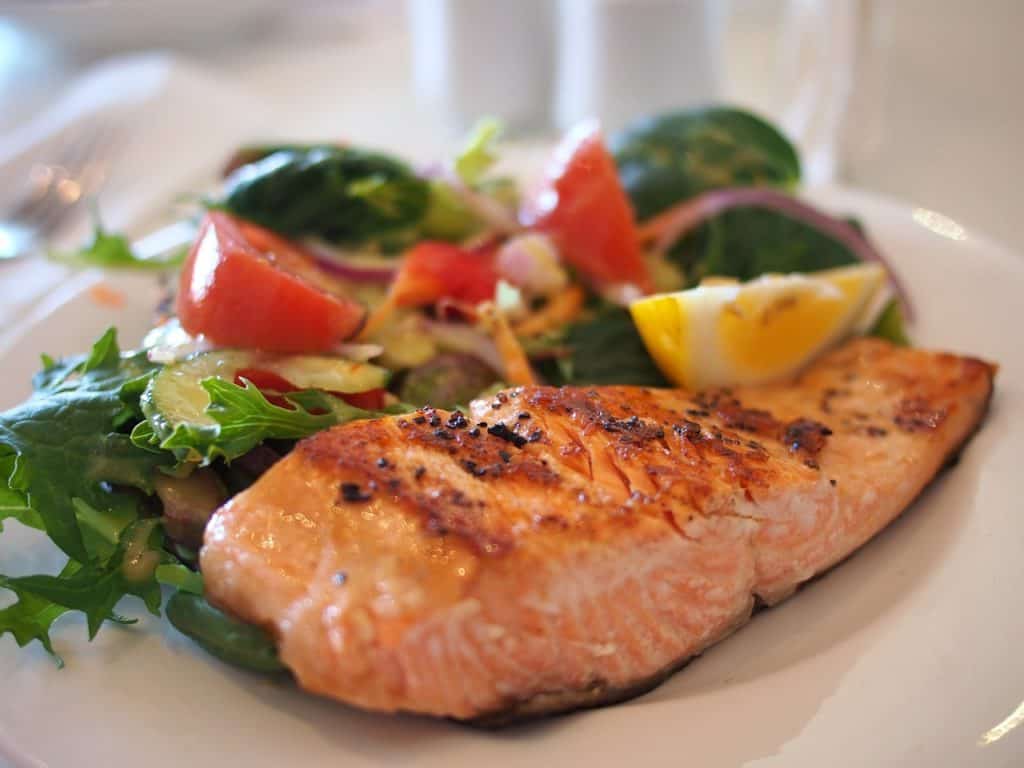
Freshly grilled salmon served with a side of mixed greens salad and lemon wedge, perfect for a healthy seafood meal at Cozumel.

The best seafood restaurant on Cozumel

Finding the Real Deal: A No-Nonsense Guide to the Best Seafood in Cozumel

Let’s be honest. When you’re in your 40s or 50s, you’ve eaten enough mediocre meals to last a lifetime. You’re standing in Cozumel, the Caribbean sun is warming your face, the water is an impossible shade of blue, and you want seafood.

But you don’t want the bland, overpriced “catch of the day” from the tourist-trap restaurant on the main strip. You know the one—it has a giant, laminated menu with pictures.

You want the real stuff.

You want the kind of place the locals guard like a secret. The spots where you can practically hear the fishermen dropping off their haul at the back door. The air smells like salt and lime, not just sunscreen. Finding that perfect spot… that’s the real vacation win. It’s not just about a meal; it’s about finding something authentic.

So, how do you find it on an island that’s buzzing with options? Let’s talk about it.

What “Best” Actually Means on the Island

Here’s a little secret: Cozumelanos (the locals) are wonderfully picky. They have high standards for everything.

They know who makes the best pan (bread). They know where to get the perfect tacos. They understand that a proper breakfast comes with traditional dishes, great beans, and strong coffee.

Seafood is no different. Locals will absolutely travel from one side of the island to the other for a plate of fish that’s worth it. When they search for the “best,” they aren’t looking for fancy tablecloths. They’re looking for a few key things:

  1. Freshness is everything. This is non-negotiable. We are talking “still swimming this morning” fresh.

  2. It has to be authentic. They want dishes from the region. This is where you might see that great local bread show up again, maybe in a torta (sandwich) or served alongside a pile of crispy fried seafood.

  3. The vibe matters. This isn’t about stiff, formal service. It’s about a place feeling right. It’s got to be relaxed. Maybe it’s an excellent spot for people-watching, or the staff treats you like a regular. It’s that energy that’s so hard to define.

  4. It’s about value, not price. This is a crucial distinction. It doesn’t mean “cheap.” It means getting incredible, high-quality food for a price that feels fair. They don’t skimp on quality, and you shouldn’t either.

Hungry pescavores (a fancy word for seafood lovers) don’t have to look too hard. No matter where you are when hunger strikes, there’s a good chance fresh fish is nearby. You have to know what to look for.

The Reigning Champion: La Conchita del Caribe

If you’re looking to impress, or you want a guaranteed home run, there’s one name that comes up again and again: La Conchita del Caribe.

This place has reportedly been the standard for seafood in Cozumel for something like 20 years. In the restaurant business, 20 years is like 100 in normal-people years. That staying power doesn’t happen by accident.

It’s a direct result of their obsession with quality and getting every detail right. You can feel it on every plate.

The menu isn’t static; it rotates based on what the fishermen bring in, which is precisely the conversation you want your restaurant to be having. You can always count on house classics, like a perfectly crispy Pescado Frito (whole fried fish), but the real magic is in the daily specials.

The atmosphere is just… right. It’s busy, sure, but it never feels hectic. It’s cozy. The open kitchen adds to the energy, letting out all those great sounds and smells. It just gives you those warm fuzzies, even before the food hits the table.

So, what should you order?

Honestly, you could close your eyes and point at the seafood menu, and you’d probably be happy. But if you’re stuck, let me make a few suggestions.

Start with the ceviche. It’s piquant, bright, and absolutely packed with fresh seafood. The seafood cocktail is another classic winner. For the most part, you really have to try one of the grilled fish selections. If they have Dorado (that’s mahi-mahi) on the list, get it. It will arrive at your table perfectly grilled, white, and flaky.

They also serve fantastic garlic shrimp, soft drinks, and ice-cold cervezas. This is the traditional, authentic Mexican seafood you were dreaming about on the plane. They take the best ingredients from the area, like the famous pulpo (octopus), and prepare them in a way that lets the ingredients shine.

This is the place that makes Cozumel’s seafood fashionable, but it’s one of the rare spots that actually lives up to all the hype.
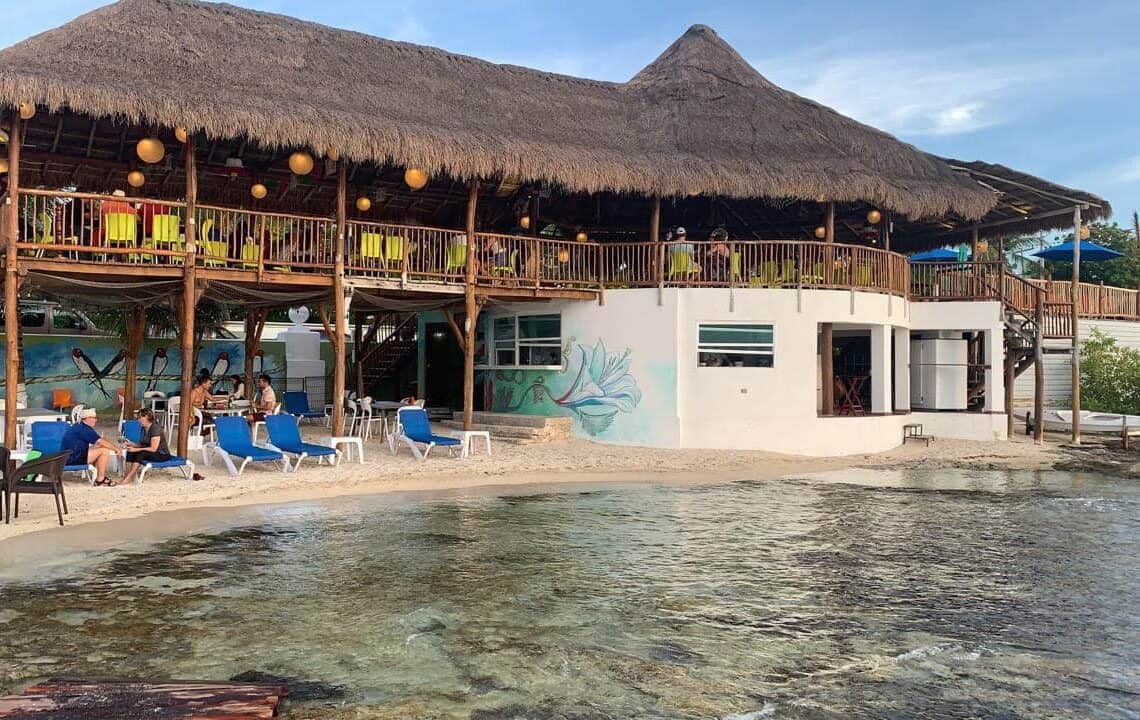
Vibrant beachfront bar La Monina in Cozumel, Mexico, with ocean views and tropical decor, perfect for relaxing vacation stays.

But Wait, There’s More…

La Conchita is a fantastic, reliable star. But it isn’t the only story. Part of the joy of traveling is discovering your spot. Cozumel’s seafood scene has layers, and the other layers are just as delicious.

The “Hole-in-the-Wall” Legend

This is the place you would 100% walk right by if you didn’t know better. It’s probably got plastic chairs, a handwritten menu on a whiteboard (if there’s one at all), and maybe only five items.

This is where you get that one perfect dish. Maybe it’s a coctel de camaron (shrimp cocktail) that’s more shrimp than cocktail. The owner is probably also the cook, and they’ve been making it the same way since 1995.

How do you find it? Look for a tiny, hand-painted sign down a side street. Or, better yet, ask a taxi driver where he eats when he’s off duty.

The “Toes-in-the-Sand” Shack

Then you have the classic beach shack. This experience is less about culinary wizardry and more about the moment.

You’ve just climbed out of the water. You’re salty, sun-drenched, and a little tired. You’re eating a whole grilled fish with your feet buried in the cool sand.

Is it the most complex meal you’ll ever have? No. Is it one of the most memorable? Absolutely. The key here is simplicity: a whole fish, a generous squeeze of lime, a cold beer, and a view that can’t be beaten.

Your Toolkit: How to Find Your Own “Best”

Okay, so you’re on the hunt. You’re ready to explore. How do you separate the real-deal gems from the traps?

Here’s a simple checklist.

  • 1. Look for a Short Menu. A giant, leather-bound menu that’s 10 pages long (and in five languages) is a bad sign. It means “freezer.” A small, focused menu—maybe on a chalkboard or a single sheet of paper—means “fresh.”

  • 2. Follow the Locals. This is the oldest trick in the book because it works. If a place is packed with families speaking Spanish at 2 PM on a Tuesday, you’re in the right spot. If it’s empty except for other sunburned tourists, keep walking.

  • 3. Ask “What’s Fresh Today?” Don’t just ask “what’s good?” Get specific. Ask what came in today. A good waiter will light up and tell you, “The Dorado is beautiful,” or, “The pulpo is fantastic right now.” If they just vaguely point at the menu… that’s a red flag.

  • 4. Trust Your Gut. You’re old enough to have a pretty good gut instinct. Does the place smell good? Does it sound happy? Does it feel clean? If a place feels “off,” it probably is.

The Real Catch

Finding the best seafood in Cozumel is more than just ticking a box on a travel blog’s list. It’s a treasure hunt.

It’s about that moment you take the first bite of ceviche and the lime and cilantro hit your tongue. It’s about the crunch of that perfectly fried fish. It’s about finding a place that feels real, because, frankly, you’re past the point of settling for anything else.

So, get out there. Be curious. Walk down that side street. And let me know what you find.

Why Book With Us?

Book through this website; we guarantee you’ll get the lowest price online. You’ll be dealing directly with us, the owners, and we never charge booking fees, so that you can save up to 30% on the cost compared to sites like Airbnb. Book our Couples retreat in Cozumel here.

The best seafood restaurant on Cozumel Read More »

A beach with orange seaweed on the sand

Sargassum Seaweed in Cozumel

Cozumel Sargassum: The Seaweed Invasion in Cozumel

Introduction

Cozumel, a popular tourist destination in the Mexican Caribbean, is renowned for its pristine white-sand beaches and crystal-clear waters. However, in recent years, the island has faced a significant challenge due to the arrival of sargassum seaweed. This type of brown seaweed has been accumulating on the shores of Cozumel and other islands in the Caribbean region, impacting both the tourism industry and the marine ecosystem. In this article, we will provide an overview of the sargassum situation in Cozumel, its effects on the island’s beaches and marine life, and the efforts being made to address this issue.

Sargassum & Cozumel: What You Need to Know Before You Book That Trip

Hi, I’m Silvia Lupone from Stingray Villa here in sunny Cozumel, Mexico. I get this question all the time from guests:

“How bad is the seaweed right now?”

It’s totally understandable. Nobody wants to plan their dream Caribbean getaway only to arrive and find the beach blanketed in brown seaweed instead of soft white sand. But here’s the good news—and it’s worth repeating:

Cozumel’s western beaches are almost always clear of sargassum.

That means if you’re staying on our side of the island—especially at a place like ours—you’re probably not going to see much seaweed at all. And if you do? It won’t last long. Local authorities and hotels are proactive in managing and removing all the sargassum, ensuring that beaches remain clean and enjoyable for visitors. Let’s break down the sargassum situation with the kind of honesty, context, and local insight you won’t get from a search engine.

SEE THE CURRENT SARGASSUM CONDITIONS HERE.

What Exactly Is Sargassum, Anyway?

Let’s start with the basics. Sargassum is a type of floating seaweed, technically a brown algae, that originates in the Sargasso Sea in the Atlantic Ocean. Thanks to little air-filled bladders called pneumatocysts, it floats freely across the ocean’s surface, forming thick rafts that can drift for thousands of miles.

One of the most common species of sargassum encountered is sargassum natans.

Think of it as a free-floating ecosystem—because that’s exactly what it is. Sargassum provides shelter, food, and breeding grounds for marine life like fish, crabs, shrimp, turtles, and even birds. It’s like a floating jungle in the middle of the sea.

Sounds kind of magical, right?

Well, it is—until it washes up on your beach vacation in big, smelly piles.

sea turtle resting on sandy beach with ocean waves in background, marine wildlife, tropical vacation, coastal scenery, in Cozumel.

The Ecological Upside (Yes, There Is One)

We don’t like seeing it on our shores any more than you do, but sargassum isn’t just a nuisance—it plays a real role in ocean health.

  • Shelter for marine creatures like baby turtles and sargassum fish

  • Food source for fish and seabirds

  • Beach restoration aid: When it breaks down, it helps create sand dunes and stabilize the shoreline

So while it’s inconvenient for us humans, it’s a win for marine biodiversity. It’s all about balance—keeping that ecological benefit offshore and our beaches clean and swimmable.

Why Does Sargassum Show Up in Cozumel?

The short answer? Currents, wind, and climate.

The longer answer: The Great Atlantic Sargassum Belt—a massive stretch of seaweed that spans from West Africa to the Gulf of Mexico—has been growing like crazy over the past decade due to warming seas and nutrient runoff from the Amazon and African coasts. That belt sometimes pushes blooms into the Caribbean, especially from April to August. The eastern shores of Cozumel, facing the open Caribbean Sea, are more prone to sargassum accumulation due to these geographical factors.

But here’s where Cozumel has a bit of an edge.

Why Cozumel’s Western Beaches Stay Mostly Clear

Our location plays to our advantage. Cozumel’s west coast is naturally shielded from incoming sargassum by geography and currents. The eastern shore, which faces the open Caribbean, is more exposed and does see seaweed during active months. But on the western side—where most resorts and boutique stays like Stingray Villa are located—it’s often clear.

And when the winds do shift and we get a little seaweed? Our municipal clean-up crews and local hotels handle it quickly. Local hotels and municipal crews also clean sargassum from deep waters to ensure a cleaner experience for guests. We’ve had mornings with some sargassum along the shore and—by afternoon—you’d never know it had been there.

Beach Effects

The arrival of sargassum on Cozumel’s beaches can significantly impact the island’s tourism industry. The seaweed can make swimming unpleasant and emit a foul-smelling gas as it decomposes, making it less appealing for tourists. Additionally, sargassum can block sea turtles’ access to nesting sites and increase sand temperatures, affecting the marine ecosystem. However, some beaches on the western shores of Cozumel, such as Playa Palancar and Punta Sur Eco Beach Park, are usually clear of sargassum and offer excellent spots for scuba diving, snorkeling, and deep-sea fishing. These sargassum-free beaches provide a haven for tourists looking to enjoy the natural beauty of Cozumel without the inconvenience of seaweed.

Sargassum and Sea Turtles: A Complicated Relationship

This is something near and dear to my heart. We have nesting turtles here in Cozumel, and sargassum can be both a help and a hindrance.

  • Good: Out at sea, it protects young turtles from predators.

  • Not-so-good: When it piles up on shore, it can block females from nesting or trap hatchlings trying to reach the ocean. It can also raise the sand’s temperature, which impacts embryo development. Additionally, sea turtles must swim through the thick algae to reach their nesting areas.

That’s why you’ll see volunteers and local organizations working hard to clear sargassum from key nesting beaches during turtle season.

Weathered seaweed line on the pristine beach at Tulum, with turquoise waters, tropical palm trees, and visitors enjoying the scenic shoreline.

The Riviera Maya vs. Cozumel

If you’re debating whether to stay in Playa del Carmen, Tulum, or Cozumel, here’s something to consider:

The Riviera Maya gets hit harder.

They’ve made incredible efforts—deploying boats, booms, and daily clean-up crews—but many mainland beaches are more affected than Cozumel’s western shores. Cancun is also affected by sargassum, with local authorities and hotels installing barriers and conducting continuous cleaning efforts to manage its presence. If you’re craving that postcard-perfect Caribbean beach without worrying about waking up to a pile of seaweed, Cozumel is the safer bet.

How Bad Can It Get? The History of Sargassum in Cozumel

The first serious sargassum invasions started around 2011 and peaked in 2018, when we saw record-breaking arrivals. Since then, Cozumel’s local government and business community have developed better response strategies—from satellite tracking to coordinated beach clean-ups.

Sargassum is a natural phenomenon that has been occurring more frequently in recent years.

These efforts help us stay ahead of the seaweed and minimize disruption for both the environment and tourism.

Arrival and Collection

The municipal government of Cozumel, along with local authorities and the Mexican government, is actively working to address the sargassum issue. Crews are manually collecting and removing the sargassum from the beaches, with over 7.5 tons of sargassum removed from the west coast of Cozumel in recent efforts. These removal efforts are ongoing, with the municipal government collaborating with other agencies to maintain a clean zone free of seaweed. Satellite imagery is also being used to monitor the sargassum situation and predict its arrival, allowing for more effective removal efforts. Despite the challenges posed by sargassum, Cozumel remains a popular destination for tourists, with its natural beauty, rich history, and vibrant culture continuing to attract visitors from around the world.

Seaweed-Free Things to Do in Cozumel

Discover the various attractions and activities available in Cozumel beyond its beaches, from diving into local wildlife to exploring historical sites and cultural experiences.

Even during the peak sargassum season, there’s a ton to enjoy here. Here are a few favorites from me and our guests at Stingray Villa:

Snorkeling & Diving

  • Palancar Reef, known for its exceptional diving experiences, offers a chance to dive into the vibrant underwater world and explore its stunning coral formations.

  • Columbia Reef

  • The C-53 WreckThese are all on the west side, and sargassum never affects diving visibility.

Nature & Culture

  • Planning to visit Cozumel? Don’t miss these nature and cultural attractions:

  • San Gervasio Ruins (Mayan history meets jungle adventure)

  • Cozumel Pearl Farm (only accessible by boat!)

  • Punta Sur Eco Beach Park (lighthouse, crocs, lagoons—you’ll thank me later)

Fishing & Adventure

Fun Fact: People Are Turning Sargassum Into Something Useful

Believe it or not, sargassum is being used in:

  • Biofuels

  • Natural fertilizers

  • Animal feed

  • Even biodegradable construction materials

So while we don’t love it on the beach, scientists and entrepreneurs are working to make it useful. Some locals are even experimenting with turning it into eco-friendly bricks!

Our Final Word on Sargassum in Cozumel

Cozumel isn’t immune to seaweed, but we’re really, really good at managing it. Most of the time, you’ll be lounging on soft sand, watching turquoise waves, completely unaware of sargassum drama unfolding on the mainland.

Ongoing monitoring efforts are in place to address the sargassum seaweed situation in Cozumel, ensuring that the natural beauty is preserved and sustainable tourism practices are encouraged.

And even if we do get a patch of seaweed? It doesn’t touch the diving, the snorkeling, the hospitality, or the magic of this island.

We built Stingray Villa to give travelers a peaceful, clean, and welcoming place to stay. We’re proud of our beach, our town, and the natural beauty we get to share—and sargassum won’t change that.

So don’t let a bit of seaweed keep you from paradise. Book your flight, pack light, and come see what makes Cozumel so special—even in peak sargassum season.

Why Book With Us?

Book through this website; we guarantee you’ll get the lowest price online. You’ll be dealing directly with us, the owners, and we never charge booking fees, so you can save up to 30% of the cost on sites like Airbnb. Book our Self-catering unit with a pool in Cozumel here.

Sargassum Seaweed in Cozumel Read More »

Scroll to Top