
Silvia and Greg

gators96
Scenic view of Cozumel beach from in Mexico, featuring a man with sunglasses smoking vape, white sand, ocean waves, and vacation atmosphere perfect for relaxation.

Vapes in Cozumel: The Party is Officially Over and Don’t Be the Example

Don’t Bring Vapes to Cozumel: New 2026 Airport Alert

You know that feeling when you first land in Cozumel? You step off the plane, and that wall of warm, humid air hits you like a hug. You grab your bags, shuffle through immigration, and then you face the final boss: the Customs “Red Light / Green Light” button.

Usually, it’s a breeze. You press the button, get the green light, and five minutes later, you’re holding a margarita.

But as of last week—January 16, 2026, to be exact—the rules of the game changed dramatically. And if you have a vape or e-cigarette tucked in your carry-on, you aren’t just risking a slap on the wrist. You are risking a nightmare start to your vacation.

We need to have a serious chat about this because the stories coming out of the airport right now are ugly. We’re talking handcuffs. We’re talking extortion. We’re talking fines that cost more than your entire trip.

Here is the reality on the ground in Cozumel right now.

The “Grey Area” is Gone

For years, vaping in Mexico was in this weird legal limbo. It was technically banned, then unbanned, then the Supreme Court issued injunctions, and it was messy. We all sort of ignored it. You’d see tourists puffing away on Melgar Avenue and vape shops popping up next to souvenir stands.

That’s over.

The federal government has dropped the hammer. As of this month, selling, distributing, importing, exporting, or advertising vapes is explicitly illegal.

There are no legal vape sales in Cozumel anymore. The shops are shuttered or pivoting to sell something else. But the real danger isn’t buying one here; it’s trying to bring one in.

The Airport Trap: “Importation” vs. “Possession”

This is where smart people get into trouble. You might read the law and say, “Wait, personal possession isn’t technically a crime! I can have it for my own use.”

In the comfort of your living room, you are theoretically right. But at the Customs desk in the Cozumel International Airport, you are wrong.

Here is the catch: When you walk through that sliding glass door with a vape in your pocket, Customs agents don’t view it as “personal possession.” They view it as illegal importation.

You are bringing a prohibited item across a federal border.

Since the new strict enforcement kicked in on January 16th, agents have broad, discretionary power. And they are using it.

Foreigners are easy targets. We look like we have money, and we look terrified when someone in a uniform starts speaking rapid-fire Spanish about “federal crimes.”

The Nightmare Scenario

Let’s play out what happens if you get stopped.

Best case? They confiscate your device, yell at you a bit, and you walk away shaking.

Worst case? We are hearing reports of travelers being handcuffed—literally “cuffs and shackles”—while they are questioned. They are threatened with the maximum penalties to induce panic.

And the penalties on the books are terrifying:

  • Fines: Up to 11,000 USDs. That’s roughly $198000 pesos

  • Prison: Up to 8 years for importing or distributing.

Now, are they actually going to throw a tourist in federal prison for 8 years over a JUUL? Probably not. But do you want to be the one to test that theory?

More likely, you will face a high-pressure situation where you are told you committed a serious crime, and perhaps there is a “fee” to resolve it right there. It’s a shakedown, plain and simple. And because the law is technically on their side regarding importation, you have zero leverage.

“But I Need My Nicotine”

I get it. I grew up in the era where you could smoke on airplanes (remember the little ashtrays in the armrests?). Nicotine is a beast.

But listen to me: Do not risk it.

If you are coming to Cozumel, go cold turkey or switch to a different method.

  • Bring patches.

  • Bring gum.

  • Bring lozenges.

These are generally fine to bring in (though keep them in original packaging just to be safe). But leave the electronic hardware at home. Do not pack it in your checked bag. Do not hide it in your shoe.

The X-ray machines are good, and the dogs are better.

A Note on the “Vibe”

It feels a bit heavy-handed, doesn’t it? For those of us in our 40s and 50s who remember a freer, looser Mexico, this shift toward strict regulation can feel jarring.

But Cozumel is still paradise. The water is still that impossible shade of blue. The food is still incredible. The people are still warm and welcoming.

Don’t let a piece of plastic and a battery ruin that for you.

The airport arrival is the only stressful part of the trip. Don’t give them a reason to make it worse. Breezing through that “Nothing to Declare” line with a clear conscience is the best way to start your vacation.

So, please, tell your friends. Tell the people you’re traveling with. No vapes. Not in the carry-on, not in the checked bag.

It’s just not worth the hassle. Come for the tacos, stay for the sunset, and leave the vape in the States.

See you on the beach.

Vapes in Cozumel: The Party is Officially Over and Don’t Be the Example Read More »

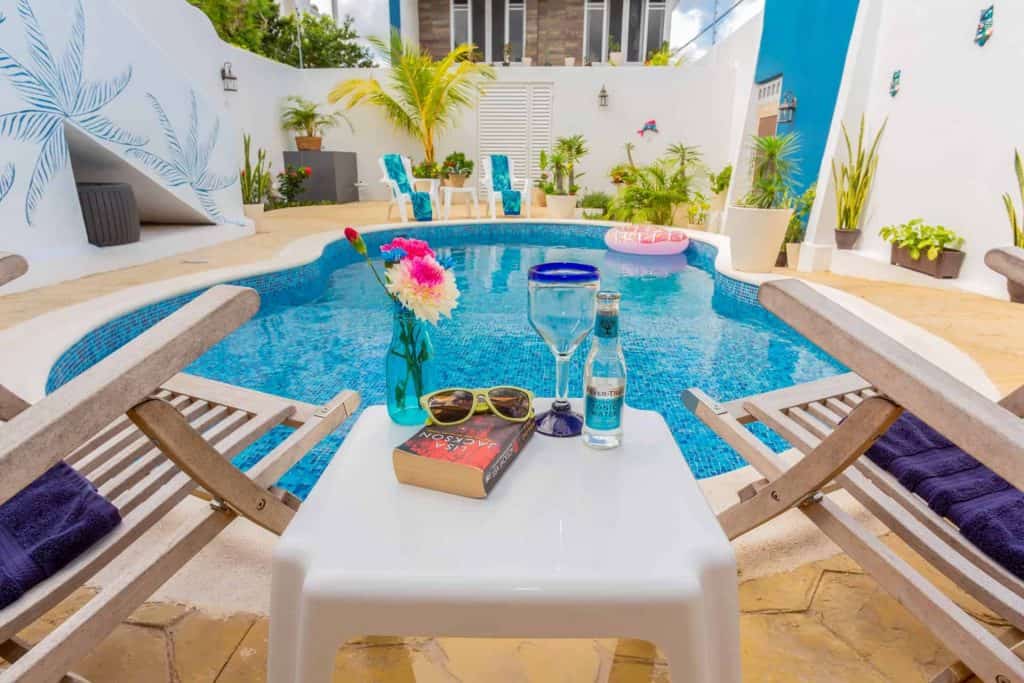
Luxurious pool at Stingray Villa in Cozumel Mexico, with tropical decor, loungers, and vibrant plants, perfect for a relaxing vacation rental by the sea.

The Top 5 Cozumel Lodges: Ultimate Guide for Dive & Eco Travelers

Cozumel Eco & Dive Lodges: Best 5 Places to Stay

Cozumel is one of Mexico’s most captivating islands — known globally for world-class diving, protected coral reefs, rich biodiversity, and warm Caribbean waters. But while many visitors focus solely on all-inclusive resorts and hotels, savvy travelers with a passion for diving, sustainability, and authentic island experiences are increasingly searching for lodges — a term Google treats differently than “hotel”, offering a valuable opportunity to rank in niche search results with good on-page SEO. Pairing “lodge” with niche modifiers like eco lodge, dive lodge, and budget lodge helps capture high-intent traffic that major OTAs often overlook.

Here’s an insider’s guide to the top 5 Cozumel lodges perfect for eco-conscious explorers, scuba divers, and adventurers.

Stylish tropical-themed bedroom at Stingray Villa with wooden furniture and vibrant wall art.

1. Stingray Villa — Best Overall Lodge for Dive & Eco Travelers

4.9Guest house

If you want a unique island base that feels like home yet functions like a dive lodge, Stingray Villa leads the pack. Unlike traditional hotels, this highly-rated guest house blends local culture, sustainable practices, and convenience in downtown Cozumel. Travel And Tour World+1

Why It’s #1

  • Sustainability at the core — From renewable energy and water-saving systems to eco-friendly operations, Stingray Villa is a leader in responsible tourism on the island. Travel And Tour World

  • Walkable location — Right in downtown Cozumel with cafes, shops, and eateries nearby.

  • Diver-friendly essentials — Hard surface floors, ample drying space, and easy access for rinse tanks make it ideal for dive trips.

  • Perfect for digital nomads & explorers — Great Wi-Fi, a safe neighborhood, and immersion in local culture.

Best for: Dive travelers, eco-minded visitors, long-stay explorers

2. Villa Maya Eco Lodge — Jungle Retreat & Nature Immersion

For true nature lovers, Villa Maya is an authentic eco lodge tucked into a private natural reserve. Expeditions Cozumel

What Makes It Special

  • Eco-friendly jungle cabin stays — Traditional-style cabins immersed in the tropical forest. Expeditions Cozumel

  • Holistic nature experiences — Guided nature walks, birdwatching, cultural activities, and wellness sessions. Expeditions Cozumel

  • Education and conservation focus — Learn about endemic species, ecosystems, and Mayan heritage.

Best for: Eco travelers, wildlife enthusiasts, cultural adventurers

3. Casa Samay Hostel — Budget Lodge Meets Backpacker Hub

A standout budget lodge option with a community vibe, Casa Samay Hostel offers travelers an affordable base in town with easy access to diving, nightlife, and restaurants.

Why It’s a Favorite

  • Super affordable — Great choice for backpackers or divers on a budget.

  • High guest reviews — Excellent ratings for cleanliness and friendly service.

  • Social environment — Ideal for meeting other travelers and planning group dives.

Best for: Budget travelers, backpackers, social adventurers

4. Dive Lodge Retreats (via Local Dive Shops + Rentals)

While Cozumel doesn’t have many classic “dive lodge” branded properties, dive-focused stays — especially smaller villas and guesthouses aligned with local dive operators — deliver an immersive experience that feels just like a dive lodge. Blue Note Scuba

How to Find Your Best Dive Lodge Feel

  • Pair your stay with local diving centers such as Eco Divers Cozumel, Barefoot Dive Center Cozumel, or Scuba XOC Dive Center for equipment, shore dives, and shore facility access.

  • Choose villas or rental lodgings near moorings or loading points to minimize travel time to dive sites.

  • Certain guests mention dive-friendly features like rinse tanks and gear drying areas being major perks when choosing town stays. Reddit

Best for: Dedicated divers, SSI/PADI certified travelers

5. Eco-Conscious Villa Rental Options — Boutique & Nature-Infused

Not strictly lodges, but still in the lodge category thanks to their sustainability focus and nature-oriented stays, private villas and suites like Villas Zamná offer an alternative mid-point between eco lodge and boutique lodging. Villas Zamna Bed & Breakfast

Highlights

  • Tropical retreat feel with garden views and proximity to nature. Villas Zamna Bed & Breakfast

  • Privacy & comfort — A perfect choice for families or couples who want eco vibes without sacrificing creature comforts.

Best for: Couples, small groups, nature lovers

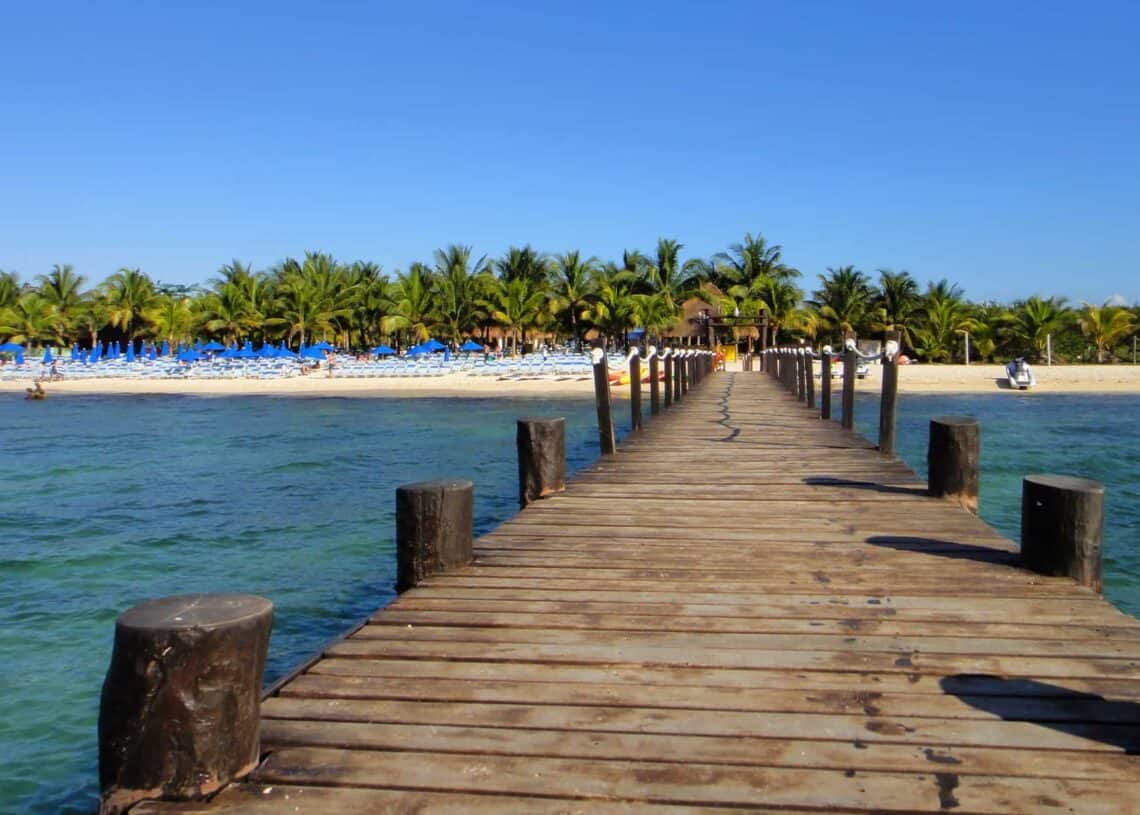
Sunny Cozumel beach with wooden pier leading to turquoise waters, lush palm trees, and blue beach umbrellas, perfect for a relaxing getaway in Mexico.

Tips for Choosing Your Cozumel Lodge

1. Focus on Niche Modifiers

Using terms like “eco lodge”, “dive lodge”, and “budget lodge” in your searches boosts your chances of discovery on Google, which often underindexes these compared to “hotel” searches.

2. Pair lodging with dive ops

Booking accommodations near dive shops or dive sites (or choosing places that offer gear wash/dry space) significantly enhances the dive travel experience. Blue Note Scuba

3. Seasonal Considerations

Cozumel’s dive season runs year-round with excellent visibility most months of the year, but peak diving conditions generally appear between December and June. CozuDive

Final Thoughts

Whether you’re a passionate diver chasing underwater adventures, an eco-conscious traveler seeking a sustainable getaway, or a budget explorer looking for local vibes, Cozumel’s lodge scene offers something special — from top-rated stays like Stingray Villa to eco retreats nestled in jungle reserves. By targeting niche lodge terms and aligning choices with your travel priorities, you’ll unlock unforgettable experiences on this Caribbean paradise.

FAQ

Most frequent questions and answers

The best lodges in Cozumel are smaller, locally owned properties focused on eco travel, diving, and authentic experiences. Stingray Villa is a top choice thanks to its sustainable design, walkable downtown location, and diver-friendly amenities.

Yes, Cozumel has several eco-focused lodges that emphasize sustainability, low environmental impact, and nature immersion. These lodges are popular with eco travelers, divers, and visitors looking for authentic island experiences.

Divers should stay in lodges or guesthouses that are close to dive shops, have space for gear drying, and offer easy access to boats or shore diving. Lodge-style stays are often more diver-friendly than large resorts.

Eco travelers typically prefer eco lodges, boutique guesthouses, or sustainable villas. These accommodations focus on environmental responsibility, community involvement, and minimizing tourism impact.

Choosing a lodge gives travelers a quieter, more personalized experience. Lodges are often more sustainable, budget-friendly, and better suited for divers and long-term stays.

The Top 5 Cozumel Lodges: Ultimate Guide for Dive & Eco Travelers Read More »
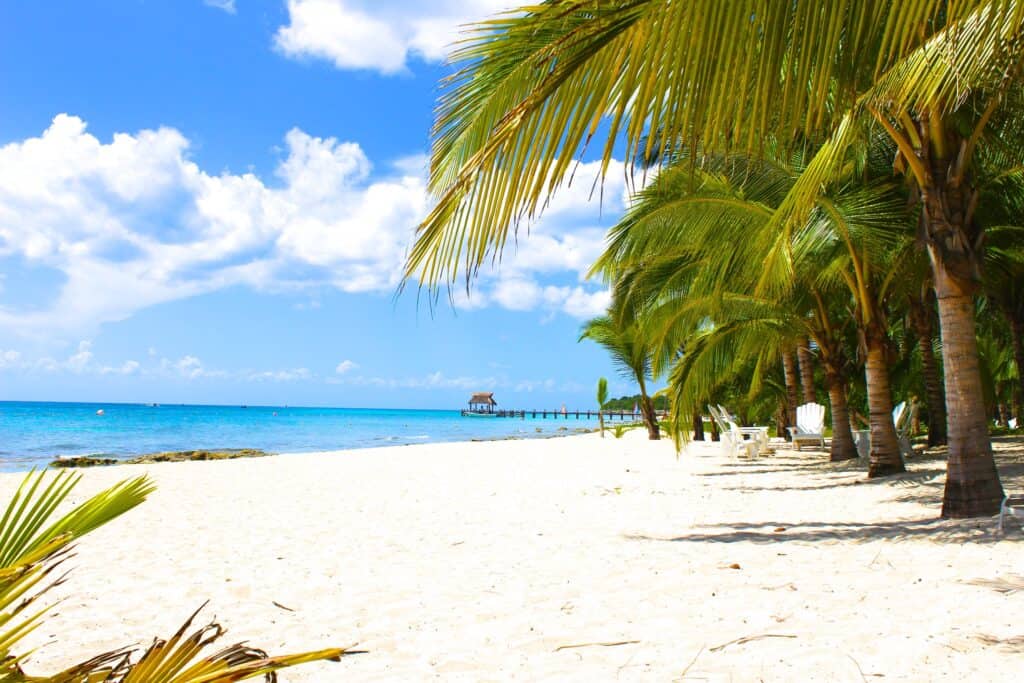
Bright tropical beach scene with white sand, palm trees, blue ocean, and clear sky at Cozumel.

Best Guest House in Downtown Cozumel for Scuba Divers

Why Experienced Scuba Divers Choose This Downtown Cozumel Guest House

Finding the right place to stay in Cozumel can make or break a dive trip—especially for experienced scuba divers in their 40s and 50s who value comfort, quiet, and convenience over crowds and chaos. While large resorts and all-inclusive hotels dominate the island, seasoned divers increasingly seek something different: a guest house in downtown Cozumel that’s close to the ferry, designed for divers, and calm enough to truly recharge between dive days.

That’s exactly why more experienced divers are choosing a boutique downtown Cozumel guest house near the ferry—and why Stingray Villa consistently stands out.

Why Location Matters for Experienced Scuba Divers

For divers who’ve logged hundreds—or thousands—of dives, convenience and efficiency matter just as much as reef quality.

Staying in downtown Cozumel offers advantages that resorts simply can’t:

  • Walkable access to dive shops and marine piers
  • Easy arrival from Playa del Carmen via ferry
  • Shorter mornings and faster returns after dive trips
  • Restaurants, cafés, and services within minutes
  • A downtown Cozumel guest house near the ferry eliminates unnecessary logistics. No long transfers. No waiting for resort shuttles. Just arrive, walk, and dive.

For divers who prefer stress-free travel, downtown isn’t just convenient—it’s strategic.

Who This Downtown Cozumel Guest House Is Designed For

Not every property fits every diver. Stingray Villa is intentionally designed for a specific type of traveler.

Experienced Scuba Divers in Their 40s and 50s

Divers in this stage of life often prioritize:

  • Quality sleep after long dive days
  • Quiet evenings instead of nightlife noise
  • Comfortable beds and strong water pressure
  • Thoughtful amenities that support diving routines
  • This is not a party hotel. It’s a space where divers can recover, relax, and prepare for the next day underwater.

Couples Who Dive Together

With just four private suites, this guest house offers:

  • Privacy instead of crowds
  • A calm atmosphere after dinner
  • A shared courtyard and pool for downtime
  • It’s ideal for couples who want a refined, low-key stay without sacrificing location.
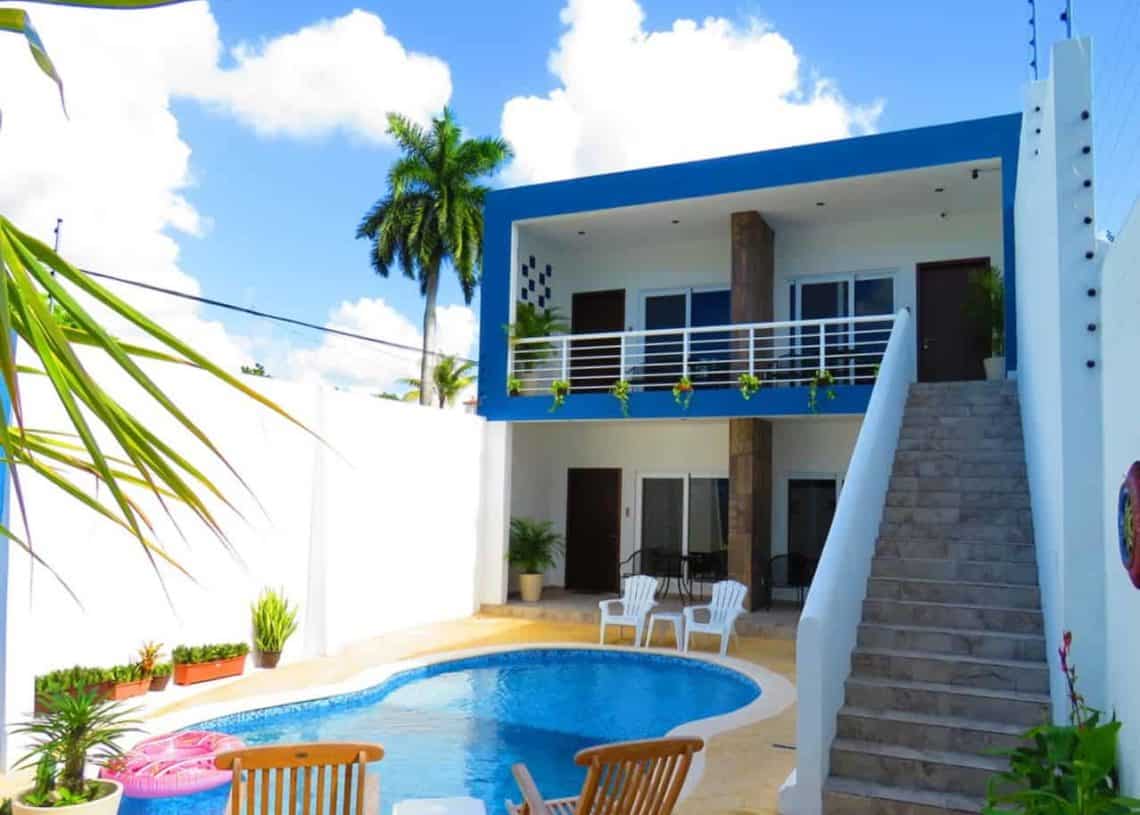
Stylish Vacation Rental at Stingray Villa in Cozumel with a private pool, lush tropical plants, and modern décor, perfect for relaxing stays in Mexico.

Introducing Stingray Villa: A Boutique Guest House in Downtown Cozumel

Stingray Villa isn’t trying to be everything to everyone—and that’s precisely why experienced divers love it.

This four-unit boutique guest house focuses on:

  • Personalized hosting
  • Exceptional cleanliness
  • High-end comfort without resort chaos
  • Each suite is designed to feel more like a private retreat than a hotel room, offering space to unwind after long days on the water.

Downtown Cozumel Guest House Near the Ferry: Walk, Don’t Wait

One of the most common voice-search questions is:
“Is there a guest house near the ferry in downtown Cozumel?”

Yes—and it matters more than most travelers realize.

Being able to walk from the ferry means:

  • No taxis with dive bags
  • No confusion after travel days
  • Faster check-in and relaxation
  • For divers arriving from the mainland, staying near the ferry reduces friction and starts the vacation immediately.
Scuba divers exploring underwater coral reef and marine life on a bright, clear day.

Scuba-Friendly Amenities That Experienced Divers Notice

What separates a good stay from a great one is attention to detail—especially for divers.

Dedicated Scuba Gear Rinse Tank

A proper rinse tank means:

  • Longer equipment life
  • Cleaner gear for the next dive
  • No awkward rinsing in showers or sinks
  • It’s a small feature that makes a big difference.

Reliable, High-Speed WiFi

Whether you’re:

  • Uploading dive logs
  • Reviewing photos and videos
  • Checking weather and marine conditions
  • Fast, stable internet is no longer optional—and this guest house delivers.

Comfortable Beds for Dive Recovery

After repetitive dives, sleep quality matters. Deep rest improves:

  • Nitrogen off-gassing
  • Energy levels
  • Overall dive safety

Comfort isn’t a luxury—it’s part of responsible dive travel.

Quiet Courtyard and Pool

Between dives, divers need calm. The shared courtyard and pool offer:

  • A peaceful surface interval space
  • Shade and airflow
  • A quiet environment free from loud music or crowds
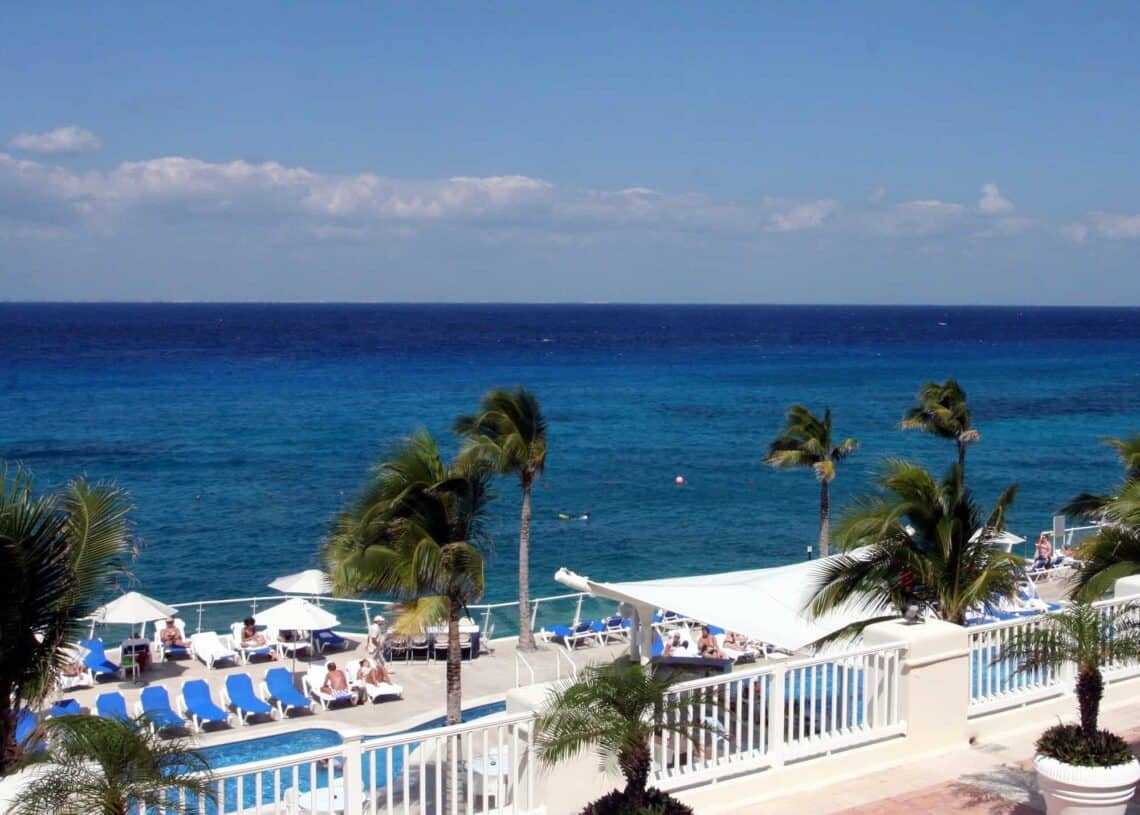
Luxurious beachfront resort with a large swimming pool and lush tropical landscaping.

Why Experienced Divers Avoid Large Resorts

Many seasoned divers actively avoid all-inclusive resorts—and for good reason.

Common Resort Drawbacks

  • Long walks from rooms to exits
  • Crowded breakfast schedules
  • Noise late into the night
  • Less flexibility with dive operators

Why Boutique Guest Houses Win

  • Faster mornings
  • Better sleep
  • Personal service
  • More control over your schedule

A guest house in downtown Cozumel aligns better with the rhythm of serious dive travel.

How Stingray Villa Compares to Other Downtown Guest Houses

Downtown Cozumel has several accommodation options, but not all are equal.

Experienced divers tend to prefer properties that offer:

  • Fewer rooms
  • Adult-oriented environments
  • Quiet neighborhoods
  • Hosts who understand diving schedules

With only four units, Stingray Villa avoids the issues common in:

  • Hostel-style accommodations
  • Party-focused boutique hotels
  • Large multi-floor properties

Less density means more peace—and better rest.

Why Booking Direct Enhances the Experience

Experienced travelers know that how you book can affect your stay.

Direct booking allows:

  • Better communication with hosts
  • Clear expectations before arrival
  • Greater flexibility for divers
  • A more personal guest experience

It’s a smarter approach for travelers who value clarity and service.

Final Thoughts: A Downtown Cozumel Guest House Built for Divers

For experienced scuba divers, accommodation isn’t just about where you sleep—it’s about how well your stay supports your diving.

Choosing a downtown Cozumel guest house near the ferry offers:

  • Easier travel days
  • Better rest
  • More flexibility
  • A calmer, more refined experience

That’s why seasoned divers continue to choose Stingray Villa—not because it’s flashy, but because it’s thoughtfully designed for the way divers actually travel.

Frequently Asked Questions

Most frequent questions and answers

Experienced divers often prefer small, quiet guest houses designed specifically for diving routines, comfort, and location near dive operators and the ferry.

Yes, staying near the ferry allows travelers to arrive on foot and avoid transportation hassles, especially with dive gear.

Absolutely. It’s designed for mature travelers who prioritize rest, comfort, and a peaceful environment.

Downtown locations allow easy access to dive shops, waterfront dining, and essential services without needing a car.

It depends on the property. A well-located boutique guest house offers quiet evenings while still being centrally located.

Best Guest House in Downtown Cozumel for Scuba Divers Read More »
Vibrant tropical beach and clear turquoise waters showcasing coral rocks, with palm trees and blue sky in the background.

Cozumel’s Shift to Sustainable Tourism, and How Stingray Villa Is Leading the Way

Is Cozumel Finally Growing Up? A Look at the New Wave of Responsible Travel

You remember how travel used to feel, right?

Back in the day, before everything was Instagrammable and we all carried high-definition cameras in our pockets, you would go somewhere like Mexico. It felt wild. It felt like you had discovered a secret. You could sit on a beach with a cold soda in a glass bottle, watch the tide come in, and not worry about a flotilla of cruise ships blocking the horizon.

We are in our 40s and 50s now. We have seen a lot of the world. If we are honest, we have also seen what happens when too many of us love a place a little too hard. That is why so many of us are now leaning toward Responsible Travel as a way to see the world without leaving it worse than we found it.

Cozumel is one of those places.

It is a paradise. The water is that unbelievable shade of turquoise that looks fake in photos but is startlingly real when you are standing ankle-deep in it. The coral reefs are legendary. But lately, things have been feeling a bit squeezed.

Last year alone, tourist numbers jumped by 15%. That is a lot of extra feet on the sand and a lot of extra showers running in hotel rooms. It is the kind of growth that makes business owners happy but keeps environmentalists up at night.

We all want to go there. We all want to see the turtles and dive the reefs. But we are also at that stage in life where we know that resources are not infinite. We worry about what will be left for our kids, or even just for us, in ten years when we want to retire somewhere warm.

The good news? The island is starting to push back, not against tourists, but against the waste that usually follows them. It is starting with the locals.

Modern Cozumel vacation rental with private pool and ocean views at Stingray Villa, perfect for a relaxing beach getaway in Mexico.

When Local Businesses Draw a Line in the Sand

It is easy to be cynical about “going green.”

We have all seen it. A hotel asks you to reuse your towel to “save the planet,” but then they serve lunch on disposable plastic plates. It feels like a marketing trick.

But real change is happening in Cozumel, and it is not coming from a massive corporate chain. It is coming from the smaller, boutique spots that actually live and breathe the island air. They are leading the charge for Eco travel by proving that you can have a world-class experience while honoring the environment.

Take Stingray Villa, for example. It is a boutique hotel right in downtown Cozumel. They recently launched a massive environmental conservation program, and honestly, it is the kind of thing that makes you nod your head and say, “Finally.”

They did not just swap out lightbulbs and call it a day. They overhauled how the whole place runs.

This is not just about looking good on a brochure. It is about survival. The island is facing real pressure. Over-tourism is a buzzkill for nature. It drains the water table, piles up trash, and stresses out the coral. Seeing a business like Stingray Villa step up is a big deal.

Stylish tropical-themed bedroom at Stingray Villa with wooden furniture and vibrant wall art.

The Nuts and Bolts: What Actually Changed?

So, what does a “sustainable” hotel actually look like in practice?

It is less about vague promises and more about plumbing and power.

Stingray Villa installed a new water management system. It is not the most glamorous topic for a cocktail party, but get this. They cut their water usage by 40%. That is huge. In a place where fresh water is precious, saving nearly half of what a normal hotel uses is a game-changer.

Then there is the power. They switched to solar panels.

If you have been to Cozumel, you know the sun is intense. It just makes sense to use that heat to keep the lights on rather than burning fossil fuels. It lowers the hotel’s carbon footprint, sure, but it also just feels smarter.

And let us talk about plastic.

We all grew up in the era of plastic convenience. Tupperware parties, plastic grocery bags, straws in every drink. It was the future! But now we know better. It never really goes away. Stingray Villa has completely phased out single-use plastics. No more little shampoo bottles that end up in a landfill. No more flimsy cups.

They even went paperless for transactions. It is 2026. Nobody needs a printed receipt for a margarita.

Why This Matters to Us (The Travelers)

You might be thinking, “Okay, that is great for them, but does it change my vacation?”

Actually, yes.

There is a peace of mind that comes with staying at Sustainable Hotels that respect their surroundings. It feels cleaner. It feels more authentic. When you use eco-friendly toiletries that do not pump chemicals into the groundwater, you are protecting the very reefs you came to snorkel in.

Silvia Lupone, the owner of Stingray Villa, put it simply. She said she wanted to prove that tourism and responsibility can coexist. She is not asking guests to sleep on the floor or take cold showers. The luxury is still there. The comfort is still there. It is just lighter.

It is guilt-free comfort.

That is what we are looking for at this stage, isn’t it? We want the nice sheets and the cold AC, but we do not want to feel like we are part of the problem.

Vibrant aerial view of Cozumel Mexico marina showcasing colorful buildings, cruise ships, boats, and clear turquoise waters near Stingray Villa vacation rental.

The Ripple Effect

Here is the cool part. When one place does this successfully, others get jealous. Or, more accurately, they get competitive.

The Cozumel Tourism Board is already pointing to this initiative as a model. They see the writing on the wall. Travelers like us, mainly Gen Xers with a little disposable income and a conscience, are starting to demand this stuff.

We vote with our wallets.

If we choose the eco-friendly spot over the big wasteful resort, the industry notices. The Cozumel Environmental Protection Association is backing this, too, because they know the reefs are fragile. Climate change is already warming the oceans. The last thing the coral needs is more pollution from the shore.

It reminds me a bit of how Costa Rica handled things years ago. They decided early on that nature was their most significant asset, and they protected it. Now, they are the gold standard. Mexico seems to be catching on.

A Shift in Mindset

This goes beyond just one hotel. It is about a shift in how we travel.

Remember when we were backpacking in our 20s? We did not care about much other than the price of a beer and a hostel bed. But we have grown up. We value quality now. Quality includes the health of the destination.

We are seeing a trend toward “slow travel.” Staying longer in one place and immersing ourselves in the local culture rather than just ticking boxes.

Initiatives like the one at Stingray Villa support that. They encourage us to slow down. To notice the details. When you know the hotel is using solar power, you become a little more aware of the sun. When you see the water is being conserved, you appreciate that shower a little more.

It grounds you in the reality of the place.

The Future Looks a Little Greener

This is likely just the start.

Imagine if every hotel in Quintana Roo cut its water use by 40%. Imagine if solar panels were the norm, not the exception. The stress on the island would drop dramatically. The reefs would have a fighting chance.

It could lead to better policies, too. Maybe we will see more investment in renewable energy for the whole island. Maybe local communities will get more involved in conservation because they know that it pays off.

For us, the travelers, it opens up a new way to see the world. We can still have our adventures. We can still drink tequila by the ocean. But we can do it knowing we are not wrecking the place for the next generation.

We can be the “cool aunt and uncle” of tourism. Fun, but responsible.

So, What is the Takeaway?

Next time you are booking a trip, take an extra five minutes. Look past the pool photos. Check if the place has a sustainability policy. Do they mention water conservation? Do they use solar?

It might seem like a small thing. But if we all do it, it adds up.

Cozumel is changing. It is growing up, just like we did. And honestly? It is wearing it well.

Frequently Asked Questions

Most frequent questions and answers

What is Cozumel's sustainable tourism?

Cozumel’s sustainable tourism is a local movement that reduces environmental impact through Responsible Travel practices, such as solar energy and water conservation, to protect the island’s vital coral reefs.

How to promote sustainable tourism in Cozumel?

Promote it by tagging eco-conscious businesses on social media, asking operators about their green policies, and publicly valuing sustainability to show the industry that it sells.

How can you promote sustainable tourism in Cozumel?

You can promote it by booking Sustainable Hotels, leaving positive reviews for green businesses, and refusing single-use plastics to signal a strong market demand for Eco travel.

Is sustainable tourism in Cozumel possible?

Yes. Success stories like Stingray Villa prove that Sustainable Hotels can offer luxury while significantly lowering carbon footprints, showing that conservation and comfort can coexist.

How to achieve sustainable tourism in Cozumel?

Achievement requires businesses to upgrade infrastructure with renewable energy and waste reduction, while travelers must actively choose eco-friendly providers to support these operational shifts.

What are the benefits of sustainable tourism in Cozumel?

The main benefits are preserving the Mesoamerican Barrier Reef, ensuring long-term economic stability for locals, reducing pollution, and creating more authentic, high-quality guest experiences.

Cozumel’s Shift to Sustainable Tourism, and How Stingray Villa Is Leading the Way Read More »

Solar panel array at Stingray Villa, Cozumel Mexico, showcasing solar energy system for vacation homes.

Taming the “DAC” Monster: A Cozumel Homeowner’s Guide to Solar

The Reality Check: Why That CFE Bill Can Feel Like a Tax on Comfort

The Taming of the Bill: How We Finally Made Peace with Electricity in Cozumel

You know that specific heaviness in the air here? It hits you the second you step out of the airport doors.

Living in Cozumel is, without a doubt, a dream scenario. It’s the late-morning scuba dives at Palancar, the Sunday cochinita pibil, and the sound of scooters buzzing down Melgar. It is a sensory feast. But let’s be real about the humidity for a second. It’s not just warm; it’s a wet blanket that wraps around you and refuses to let go.

In our 20s, maybe we could have slept with just a ceiling fan and a damp sheet, convincing ourselves it was “authentic.” But we are in our 40s and 50s now. We’ve earned our comfort. We want—and honestly, we need—air conditioning.

And that is where the dream crashes headfirst into a very expensive reality.

For anyone who owns a home on this island, there is a bi-monthly ritual that induces a specific type of anxiety. It’s the arrival of the CFE bill. Whether it’s slipped under your gate or popped up in your email, opening it feels like playing Russian Roulette.

We have a modest home here. For a long time, the bills were manageable. But recently, we started noticing a creep. We were inching closer to the dreaded “DAC” limit. If you don’t know what DAC is, consider yourself blessed. If you do, you know exactly why my stomach was in knots.

So, in an effort to stop hemorrhaging cash and maybe do right by the planet, we looked into solar. What we found wasn’t just a financial fix; it was a total shift in how we live in our own house.

Here is what we learned, the mistakes we almost made, and how we fixed it.

The CFE Boogeyman: Understanding the “Penalty Box”

Before you can solve the problem, you have to respect the mechanics of it.

The CFE (Comisión Federal de Electricidad) is the government-run utility. And to be fair to them, the system is designed with a noble purpose: social subsidy. The goal is to ensure that a local family living in a small casita with three lightbulbs, a fan, and a TV can afford power.

For that basic usage—usually under a few hundred kilowatt-hours (kWh)—the electricity is incredibly cheap. We’re talking roughly 5 cents (USD) per kWh. It’s practically free.

But you and I? We aren’t that profile.

We have pressure pumps for showers, maybe a pool filter running six hours a day, a big fridge, and the holy grail: Mini-Split A/C units.

The CFE pricing model is a steep staircase. As your usage climbs, the government subsidy vanishes. You go from paying pennies to paying 21 cents, then 30 cents per kWh. Suddenly, a month of “comfortable” living results in a bill for 10,000 or even 25,000 pesos ($500 to $1,300 USD).

And then, there is the cliff edge: DAC.

DAC stands for Tarifa de Alto Consumo (High Consumption Rate). If your average consumption over the last six billing cycles (12 months) exceeds the limit for your zone—in Cozumel (Tariff 1D), that’s usually 2,000 kWh every two months—you get kicked into the DAC tier.

Once you are in DAC, there are no steps. There is no subsidized “starter” rate. You pay the maximum rate for every single watt you use, from the very first light switch you flip. It is a financial penalty box, and getting out of it takes months of sweating in the dark to lower your average.

We were flirting with that line. I decided I wasn’t going to cross it.

Why Solar Isn’t Just for “Greenies” Anymore

I’ll admit, I had some preconceptions. Ten or fifteen years ago, residential solar felt like buying a boat—a massive upfront cost that you did because you were passionate, not because it made financial sense.

Back then, you were looking at $15,000 to $20,000 for a system, and the technology was… fine. Not great, just fine.

But while we were busy living our lives, the tech world quietly revolutionized solar. The cost of panels has plummeted, and the efficiency has skyrocketed.

In Cozumel specifically, the landscape has shifted. It used to be a nightmare to import the gear. Now? The supply chains are greased. When I started running the numbers, I realized that solar in Mexico is actually cheaper than in the US, which is already one of the most affordable markets globally.

The math used to say, “You’ll break even in 10 years.” Today, the math says, “You’ll break even in two.”

Yes, two years.

When you stack the sky-high cost of CFE’s DAC rates against the rock-bottom price of modern solar panels, the ROI (Return on Investment) is undeniable. It’s better than the stock market. It’s better than real estate. It’s a guaranteed return.

The Rental Factor: A Gen X Business Move

There is another angle here for those of us who rent out our properties when we aren’t on the island.

The travel market has changed. We aren’t just hosting Boomers anymore; we’re hosting Millennials and older Gen Z travelers. I’ve seen the data—these demographics filter their Airbnb and Vrbo searches. They actively look for “eco-friendly” stays.

There is a distinct “guilt factor” for tourists running A/C in the tropics. They know it’s bad for the environment. If you can tell them, “Hey, crank the A/C, it’s powered by the sun,” you alleviate that guilt.

It becomes a unique selling proposition. Your property isn’t just a condo; it’s a sustainable condo. That distinction alone can be the tie-breaker that gets you the booking over the guy next door.

The Hunt for a Trustworthy Guide

Okay, so the “why” was easy. The “how” was the headache.

If you’ve done any construction in Mexico, you know the drill. You ask for a quote, you wait a week. You call again, and they say “mañana.” You get a price that seems to be based on the contractor’s mood rather than math.

I am a researcher by nature (and perhaps a bit of a control freak). I dove deep into the CFE regulations. I read forums. I annoyed people at dinner parties by asking for recommendations.

I heard the horror stories. Panels flying off roofs during tropical storms. Inverters are frying because they weren’t grounded properly. Installers are disappearing halfway through the job.

I needed an engineer, not a salesman.

After weeks of vetting, I landed on a local company called SolarSplit. The owner is Ricardo Domingo Pech.

Here were the green flags that popped up immediately:

  1. He’s local. He lives here. He isn’t flying in from Cancun.

  2. He’s an engineer. He has a massive solar array on his own roof. He eats his own cooking.

  3. He didn’t try to sell me.

The “Less is More” Strategy

This was the moment I knew I had the right guy.

I called Ricardo, ready to buy a system that would cover 100% of my energy usage. I wanted the meter to hit zero.

Ricardo looked at my historical CFE bills—he insisted on seeing the history, not just one bill—and shook his head.

“I can sell you 100% coverage if you want,” he told me (I’m paraphrasing). “But it’s a bad investment.”

He explained the strategy: Tier Shaving.

Remember that subsidized rate I mentioned? The first few hundred kilowatts that cost pennies? It makes absolutely no financial sense to spend thousands of dollars on solar panels just to replace electricity that the government is practically giving you for free.

The goal isn’t to kill the bill entirely. The goal is to kill the expensive tiers.

You want a system that wipes out the DAC rates and the high-consumption overages, leaving you with just the cheap, subsidized baseline consumption.

He ran the numbers specifically for my home. He designed a system that would keep us safely out of the “penalty box” for an investment of around $3,000 USD.

I was braced to spend double or triple that.

He showed me the spreadsheet. Projected savings per billing cycle. Projected break-even point: 2 years and 1 month. After that, the equipment is paid for, and the savings go straight into our pockets.

The Installation: Hurricane-Proofing the Dream

Signing the check is the easy part. Watching someone drill holes in your roof is the hard part.

In Cozumel, we don’t just have rain; we have horizontal rain. We have wind that tears palm trees out of the ground. You cannot just bolt a solar panel to the roof with a standard bracket and hope for the best. If a panel comes loose in a Category 4 hurricane, it’s not a solar panel anymore—it’s a missile.

Ricardo’s team showed up on time (another miracle). They were surgical.

They didn’t just drill into the roof coating. They dug down to the structural concrete for every single footing. They used stainless-steel anchoring bolts—imperative in this salty air—and secured them with heavy-duty epoxy. Then, they sealed the entire footing with a secondary waterproofing compound.

I watched them work. They involved me in the decision about where the inverter would go (out of direct sunlight, protected from rain). They cabled everything neatly. It looked like industrial art.

For the first time in my history of owning a home in Mexico, I wasn’t pacing around nervously. I was actually enjoying the process.

The CFE Handshake

The final boss level is, of course, CFE. You can’t just hook up panels and spin the meter backward; that’s illegal. You need a bidirectional meter.

SolarSplit handled the bureaucracy. CFE sent an engineer out to inspect the work. They verified that the inverter would shut down automatically if the grid went down (this is crucial—you don’t want to be back-feeding power into the lines while a lineman is trying to fix a transformer down the street).

Inspection passed. Meter reprogrammed. We were live.

Living with the Sun

There is a psychological shift that happens when you open the monitoring app on your phone.

You see the curve of solar production spike at noon. You see the numbers ticking up. You realize that the air conditioner humming in the background is being powered by the very sun that’s heating up the patio outside. It feels like you’ve pulled off a magic trick.

We sleep better now. Literally, because we run the A/C at a crisp temperature without guilt. But also figuratively. The fear of the CFE bill is gone. We know roughly what it will be every time—low, predictable, and manageable.

The Verdict

If you live in Cozumel, or even just snowbird here for a few months a year, look at your bill. If you see “DAC,” you are bleeding money. Even if you aren’t in DAC yet, you are likely paying a premium for comfort you don’t need.

The technology is ready. The prices are low. The ROI is undeniable.

My advice? Don’t waste three months scrolling through Facebook groups and getting contradictory advice, as I did. Go to the source.

Reach out to Ricardo Pech at SolarSplit. Let him look at your receipts. He’ll tell you the truth about what you need—and more importantly, what you don’t need.

You can email him at ricardo@solarsplit.mx or reach him by cell at (987) 115-4526.

Life in Cozumel is supposed to be relaxing. Don’t let a piece of paper ruin the vibe.

Taming the “DAC” Monster: A Cozumel Homeowner’s Guide to Solar Read More »

Pool at a all-inclusive hotels near Stingray Villa in Cozumel Mexico

The Great Cozumel Debate: The All-Inclusive Wristband or Your Own Front Door?

Cozumel Vacation Rentals vs. All-Inclusive: An Honest Comparison

So, you’re going to Cozumel. Fantastic choice. You’ve already pictured it: that impossible turquoise water, the slow-motion drift dives, the cold cerveza with a lime. But before you get to the relaxation, you have to answer the big question.

Where are you going to stay?

It used to be simple, right? Back in the day, you’d call a travel agent (remember those?) and pick from three or four big hotels. Job done.

Now, you’re staring at two completely different trips.

On one side, you have the Cozumel all-inclusive hotel. It’s the world of the wristband—a promise of bottomless margaritas, grand buffets, and zero decisions. On the other hand, you have the Cozumel vacation rental—a quiet villa, a sleek condo, or a house with its own private pool. It’s the promise of freedom, authenticity, and… well, making your own coffee.

This isn’t just about a bed. It’s about the entire texture of your vacation. Are you looking for a curated, effortless escape? Or do you want to live on the island, even if it’s just for a week?

As someone who has seen countless travelers try to solve this riddle, let’s talk it out. No marketing fluff. Just the real, grounded differences to help you decide.

Beautiful ocean view near Stingray Villa with pool and palm trees on the terrace

Part 1: The All-Inclusive Promise (And Its Realities)

Let’s call the all-inclusive what it is: the path of least resistance. And honestly, after a brutal year, “least resistance” sounds pretty great.

You pay one price. You check in. You put on the wristband. From that moment until you check out, you don’t really have to reach for your wallet. The food is handled. The drinks are handled. The pool chairs are (mostly) handled. Your only job is to show up.

Here’s who this is perfect for:

  • The First-Timer: If it’s your first visit to Cozumel, an all-inclusive is a fantastic, safe option. You’re in a managed environment, often with prime beach access, and you have a concierge to book your excursions.

  • The Short-Termer: Here for a 3-day weekend? Don’t waste a minute of it shopping for groceries or trying to find a good breakfast spot. Get in, hit the swim-up bar, and soak up the sun.

  • The “I Just Can’t” Traveler: You’re burned out. You make 100 decisions a day at home. The idea of deciding where to eat dinner 7 nights in a row sounds like work. The all-inclusive is your permission to clock out.

It’s easy. It’s predictable. And for a group where everyone has a different budget, it settles the “who-owes-what” anxiety before it even starts.

But let’s be real about the flip side.

That “one-price-fits-all” can mean food that’s designed for mass appeal. Think good, not necessarily great. You might find yourself craving a truly authentic, hole-in-the-wall taco al pastor, but the buffet is just so… easy.

You also live in a beautiful bubble. The resorts are gorgeous, but they aren’t always the “real” Cozumel. You’re less likely to wander into San Miguel for dinner or find that tiny local beach if you’ve already paid for the meal and the palapa back at the hotel.

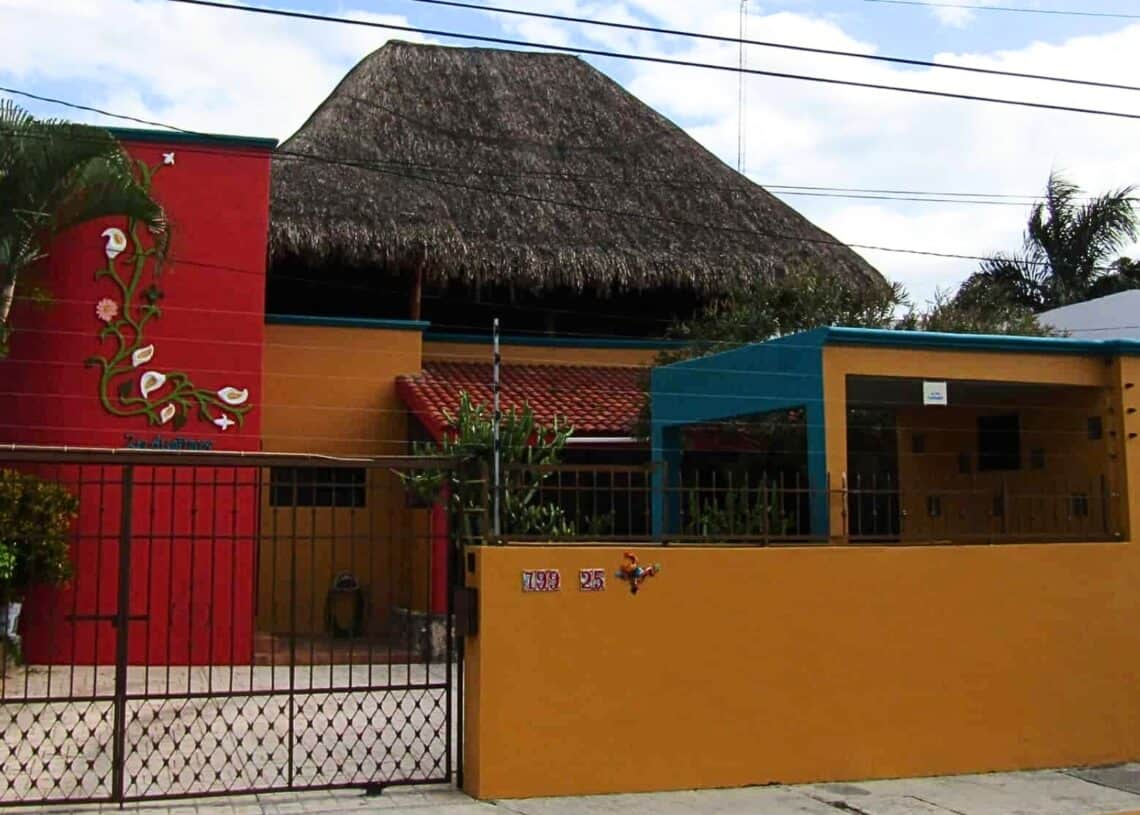
Colorful vacation rental house in Cozumel, Mexico with vibrant walls, tropical decor, and a thatched roof.

Part 2: The Vacation Rental Reality (Freedom and a Grocery Run)

This is the other side of the coin. A vacation rental—whether it’s an apartment in town, a condo on the beach, or a full-on luxury villa—is your own private slice of the island.

You get a key. You get a kitchen. You get a living room. You get to feel, for a little while, like a local.

The upside is obvious: space and flexibility.

If you’re traveling with your kids, you get separate bedrooms. No more hushing them at 8 PM in a dark hotel room. If you’re with a group of friends, you get a common area to hang out that isn’t the hotel lobby. You can make a pot of coffee and have it on your private balcony. You can buy fresh fruit and avocados at the market and make your own guacamole.

It’s the unscripted vacation.

This is the clear winner for:

  • Groups and Families: It’s not just about space; it’s about cost. Splitting a 3-bedroom villa among six people is almost always more cost-effective than booking three separate hotel rooms.

  • The Independent Traveler: You want to find that local taco spot. You want to rent a Jeep and get lost. You want your vacation to be a story of discovery, not a packaged tour.

  • Scuba Divers: This is a big one. Divers are a different breed. You’re up early. You’re back in the afternoon with a mountain of wet gear. You don’t need a foam party at 3 PM. You need a good shower, a place to rinse and hang your BCD, and a quiet spot to log your dives. A rental gives you that utility.

  • The Long-Stay: If you’re lucky enough to be in Cozumel for 10 days or more, a rental is a no-brainer. You’ll save a fortune by not eating out three meals a day, and you’ll appreciate having a “home” to come back to.

But let’s not romanticize it.

“Your own place” means you’re the one in charge. There’s no concierge. There’s no room service. If you run out of toilet paper, you’re the one going to the store. You’re responsible for your own meals, your own plans, and your own security. For some, that’s the adventure. For others, it’s work —with a tan.

So, How Do You Actually Choose?

Forget the “vs.” for a second. This isn’t a competition. It’s a “what’s right for this trip” question.

Ask yourself these four things:

  1. What’s the real budget? An all-inclusive looks more expensive upfront, but a vacation rental can add up. Once you add in rental cars, groceries, and eating out, that “cost-effective” condo might be a wash. Do the math. A $300/night rental plus $150/day in food/drinks is $450. A $400/night all-inclusive is… $400.

  2. Who are you with? A romantic getaway for two, where you plan to be out diving all day? A rental is perfect. A big family reunion with grandparents and grandkids? An all-inclusive resort, with its kids’ clubs and endless food, might just save your sanity.

  3. How long are you staying? Less than 5 days? The all-inclusive is easy. More than a week? The rental starts to make a lot more sense.

  4. What’s your “Why”? Why Cozumel? If your answer is “to scuba dive every single day,” your needs are simple: a bed, a shower, and proximity to a dive dock. If your answer is “to unplug and be pampered,” you’re describing an all-inclusive resort.

Modern vacation rental home in Cozumel with private pool and ocean views, perfect for a relaxing getaway at Stingray Villa. Tropical decor and outdoor lounge area ideal for family stays.

A Quick Case Study: The Small Villa Advantage

“Vacation rental” is a massive category. It can mean a studio apartment over a loud bar in San Miguel, or it can mean something else entirely.

Let’s get specific, because this is where the lines blur in the best possible way.

There’s a category of small, boutique Cozumel villas that, in many ways, are the best of both worlds. These aren’t massive, anonymous resorts. They’re often purpose-built for a certain kind of traveler.

Take, for example, Stingray Villa. It’s not a resort; it’s a private property with just four units. This is a model you see across the island, and it’s brilliant. It’s designed for people who have graduated from the big resort scene.

Here’s what that feels like:

  • It’s Personal: Instead of 400 cookie-cutter rooms, you get a place with character. You might find granite countertops, tile floors, or painted murals. It feels like you’re staying at a friend’s (very nice) house.

  • It’s Quiet: With only a few other guests, you’re not fighting for a lounge chair. The 2 AM party crowd does not wake you up. This kind of setup clicks for couples, especially those in their 50s and 60s, who want connection, not crowds.

  • It’s Purpose-Driven: Many of these smaller villas are built by divers, for divers. They have dedicated rinse tanks, secure gear-drying areas, and are often located just a short walk from the marina. They get it. They know you don’t care about a nightclub; you care about a hot tub after a long day underwater.

  • It’s Smart Value: You get the “luxury villa” feel—maybe even your own private pool—for a price that is often shockingly less than a mid-range all-inclusive. Why? Because you’re not paying for 10 restaurants you won’t eat at or a stage show you won’t watch. You’re paying for the things you actually want: comfort, privacy, and peace.

This is the hidden “third option.” It’s not the total-service-bubble of a resort, and it’s not the total-DIY of a standalone Airbnb. It’s a curated, intimate experience.

The Final Verdict: What Story Do You Want to Tell?

Here’s the bottom line.

Go for an all-inclusive hotel if you want your vacation to be simple, beautiful, and relaxing. You’re at a resort. You’re on vacation. It’s a state of being. You’re there to be served, and there is zero shame in that.

Choose the vacation rental or private villa if you want your trip to be a verb. You’re exploring. You’re driving. You’re shopping. You’re living. It’s a more active, engaged way to travel, and the rewards are a more profound sense of connection to the island.

Neither is better. They’re just different.

The only “wrong” choice is picking one when you really wanted the other. So, be honest about what you’re looking for, and you’ll have an incredible time.

You’re in Cozumel, after all. It’s pretty hard to go wrong.

The Great Cozumel Debate: The All-Inclusive Wristband or Your Own Front Door? Read More »

Scuba divers exploring underwater coral reef and marine life on a bright, clear day.

Don’t Book Any Cozumel Stay Until You See This Award-Winning Villa

The ‘Book Direct’ Secret That Saves Scuba Divers 30% on a Luxury Cozumel Stay

Don’t Book Any Cozumel Stay Until You See This Award-Winning Villa

Go ahead, open that travel booking site. You know the one.

You type in “Cozumel” and… voilà. A hundred listings that look exactly the same. Sprawling all-inclusive resorts, generic hotel rooms, and “deals” that look suspiciously standard.

You’re about to click “book” on one of them just to get it over with.

Stop.

Before you lock in that generic, “just okay” room, you need to see the place that seasoned travelers and divers actually book. The one that’s been ranked #1 on TripAdvisor for years.

The “Generic Stay” Trap

Here’s the thing about those big resorts: they are a one-size-fits-all solution.

You get the crowded buffet, the long walk from your room to the pool, and the feeling of being in a bubble, completely disconnected from the real Cozumel. You’re paying for a lot of things you don’t use, and you’re stuck in one (often remote) location.

It’s… fine. But “fine” isn’t what you want for your vacation.

What if you could get 5-star luxury, a perfect downtown location, and pay less than you would for that generic hotel room?

WATCH THE VIDEO BELOW.

The Villa That Wins All the Awards

There’s a place called Stingray Villa. And no, it’s not a hotel.

It’s a family-owned, four-unit luxury property. Think of it as your own private, high-end apartment in the heart of Cozumel.

This is the place that wins awards and gets glowing 5-star reviews year after year. Why? Because they offer something the big resorts can’t.

  • Real Luxury: We’re not talking about a thin bathrobe. We’re talking 800-thread-count Egyptian cotton linens, blazing-fast 800 Mbps internet in every room, and full kitchens so you can have your coffee just the way you like it.

  • Total Privacy: With only four units, there are no crowds. Ever. The pool is your personal oasis, not a public swimming event.

  • The Perfect Location: It’s downtown. You can walk to dozens of the island’s best local restaurants, shops, and bars. No expensive taxi rides every time you want to leave the “compound.”

  • Diver-Friendly (If That’s Your Thing): If you’re a diver, it’s heaven. It’s a short walk to the best dive ops, and it has dedicated rinse tanks and secure gear lockers. Your expensive equipment isn’t just dumped in a corner.

The Secret to Getting This 5-Star Stay for 30% Less

Okay, here’s the real reason you’re reading this.

If you go looking for this villa on one of those giant booking sites, you’re paying too much. Way too much.

Those big sites charge owners (like the family at Stingray Villa) massive commissions, sometimes up to 30%. And guess who really pays that fee? You do. It’s baked right into the price you see.

The owners would much rather pass those savings on to you.

When you book directly on their website, you cut out the middleman. You get the absolute best price, guaranteed. You save a ton of money, and you get a better, more personal experience because you’re dealing directly with the people who own the place.

So, Before You Book…

Take 10 minutes. Before you commit to that “fine” hotel room, just go look at what an award-winning, #1-rated villa actually looks like.

See the difference between a generic stay and a personalized, 5-star experience.

You might find that the best-kept secret in Cozumel costs less than the most average hotel. Don’t book anything until you see it for yourself.

Don’t Book Any Cozumel Stay Until You See This Award-Winning Villa Read More »

Colorful vacation rental house in Cozumel, Mexico with vibrant walls, tropical decor, and a thatched roof.

Cozumel Scuba Divers Mourn the Closing of a Beloved Landmark: Farewell, Los Alcatraces Cozumel

Los Alcatraces Cozumel: Farewell to a Scuba Landmark and the Story That Lives On at Stingray Villa

Some places are more than just buildings, aren’t they?

Have you ever walked past a place you once loved: a restaurant, a bookstore, a quiet little corner of the world that felt like yours? Then to only find it closed and empty? There’s a specific kind of hollow feeling that comes with that moment. It’s not just disappointment. It’s like discovering a small hole in the map of your memories.

For many scuba divers who found their way to Cozumel over the last decade, that hole now sits on 25th Avenida, where Los Alcatraces Cozumel once stood.

If you know, you know. And if you don’t, this wasn’t just another place to stay. It was a scuba-diving landmark in Cozumel: quiet, unpolished, and deeply loved.

A Dive Guesthouse Built With Heart (Not Luxury)

Back in 2011, we opened Los Alcatraces with no grand plan. Just a dream, two rooms, and a deep love for this island and the diving community that keeps returning to it.

Los Alcatraces wasn’t fancy, and that was exactly the point.

No infinity pool. No glossy lobby. What it did have was a soul. It was built by people who understood divers. We knew you needed:

  • A solid rinse tank for your gear

  • A safe place to hang wetsuits

  • Quiet mornings before boat departures

  • Even quieter evenings after long drift dives

Word spread the way good dive spots always do—quietly and among the right people. Over time, Los Alcatraces became an unofficial clubhouse for Cozumel divers. Guys like Adam from Scuba Tony (yes, that Scuba Tony) and Scott Harrell from Scuba Luis were regulars. Stories were swapped in the courtyard. Tanks clanked in the early morning stillness. Friendships formed between surface intervals and sunset beers.

That kind of magic can’t be manufactured. It grows organically—like coral.

A bed with a white and brown bedspread and a painting on the wall.

Why Los Alcatraces Cozumel Meant So Much

There’s a concept called a “third place.” Not home. Not work. But the place where the community lives.

For many divers, Los Alcatraces was precisely that.

Dive trips shrink your world down to tides, tank pressure, and bottom time. Being surrounded by people who speak that same language (without explanation) means everything. Los Alcatraces wasn’t just a guesthouse. It was a home base for a transient tribe united by the ocean.

Passing the Torch and Weathering the Storm

After eight unforgettable years, our journey evolved. In 2018, we passed Los Alcatraces into new hands as we began building something new just a few blocks away.

For a while, the spirit continued. Divers still gathered. Ironman athletes found quiet focus there. The DNA of the place held firm.

Then came 2020.

The pandemic hit Cozumel hard. Dive boats stopped running. Tourism slowed to a trickle. Add the ongoing challenges of sargassum and shifting economic tides, and many small, heartfelt places couldn’t survive.

Today, Los Alcatraces Cozumel is permanently closed. The building stands with a “For Sale” sign, a quiet ground that feels sacred to many of us who have passed through its gates.

From Los Alcatraces to Stingray Villa: The Dream Lives On

But this isn’t just a goodbye story.

Everything Los Alcatraces taught us lives on at Stingray Villa.

When we found a larger property on 15th Avenida, we knew it was our chance to take everything we learned and build something more spacious, without losing the intimacy. The vision was clear: a boutique, diver-friendly mini-resort that still felt like coming home.

Today, Stingray Villa offers:

  • Four thoughtfully designed apartments

  • A central pool and garden that naturally brings people together

  • A relaxed, social atmosphere is perfect after a day of diving

Guests from over 100 countries have passed through since then. Stories are still shared, now poolside rather than in the courtyard. The laughter sounds the same. The sunsets still stop us in our tracks.

A Farewell—and a Thank You

If you ever stayed at Los Alcatraces Cozumel, you remember it. The room. The shower tile. The spot where your gear always dried. You remember the people, even if you’ve forgotten their names. Most of all, you remember the feeling of belonging.

Los Alcatraces Cozumel will always be part of Cozumel’s dive soul.

And while the doors on 25th Avenida have closed, the spirit that lived there didn’t disappear. It simply moved a few blocks away—and kept growing.

Here’s to the memories. And here’s to what comes next.

FAQ

Most frequent questions and answers

Los Alcatraces Cozumel permanently closed after years of serving the scuba diving community. Economic challenges, the pandemic, and changes in tourism contributed to its closure.

No. Los Alcatraces Cozumel is permanently closed, and the property is currently for sale.

Los Alcatraces Cozumel was founded and originally operated by Greg and Silvia Lupone, who ran the guesthouse from 2011 until 2018.

Yes. Stingray Villa was created by the original founders of Los Alcatraces and carries forward the same diver-friendly philosophy in a larger, boutique setting.

Many former Los Alcatraces guests now stay at Stingray Villa, which offers a quiet location, diver-friendly amenities, and a strong sense of community.

Yes. Stingray Villa is designed with divers in mind, offering comfortable accommodations, space to relax after dives, and easy access to Cozumel’s dive operators.

Cozumel Scuba Divers Mourn the Closing of a Beloved Landmark: Farewell, Los Alcatraces Cozumel Read More »

Colorful Cozumel island sign by the ocean in Mexico, vibrant travel destination.

Sign Up for a Free Cozumel Guidebook

Discover Cozumel Smarter: Get Your FREE Cozumel Mexico Travel Guide

See Cozumel the Right Way

Remember the excitement of planning a vacation? Then the slow creep of stress that follows? You spend hours hunting for the best spots, making lists, and mapping everything out. By the time you get there, you’re almost too tired to enjoy it. What if you could just skip all that and get straight to the good part?

DOES YOUR COZUMEL ACCOMMODATION SEND YOU A DIGITAL GUIDEBOOK?

And it’s not just the usual “10 things to do in Cozumel” list you’ll find on every travel blog. This is insider knowledge you’d usually only get after living here for years.
It covers:
  • What not to pack (because lugging extra gear through the airport is never fun)
  • Step-by-step instructions for navigating the Cancun airport and making your way to Cozumel
  • The easiest way to get from Cozumel’s airport to the villa without overpaying
  • A guide to the three ferry companies running between Playa del Carmen and Cozumel—because yes, they’re not all the same
  • How to call taxis without confusion on a app like UBER
  • Restaurant picks that go beyond tourist traps (including where to find the best frozen drinks)
  • The nearest beach spots you can actually walk to
  • Why renting a car makes more sense than a scooter here
  • Tips on using pesos instead of dollars, so you don’t lose money on exchange rates
  • Even recommendations for reliable doctors and dentists in case you need care during your trip
It’s the kind of thoughtful detail that takes away the stress of traveling somewhere new. Guests often say that the guidebook alone made their trip smoother and more enjoyable.
 

Don’t Get Lost in the Planning

Here’s the thing about traveling to a place like Cozumel. You want that authentic feel. You want to eat where the locals eat and find that quiet stretch of beach that isn’t swarming with tourists. But how do you find those places? You could spend your precious vacation time with your face buried in your phone, searching for reviews and praying for a decent WiFi signal. Honestly, that doesn’t sound like much of a vacation to me.

It’s a classic travel problem. We want the freedom of exploring, but we also don’t want to waste a single moment.

A Better Way to Explore

Let me explain what I mean. I’ve put together a simple Cozumel Mexico Travel Guide, and I want you to have it for free. Think of it as your little black book for the island. You just add it to your phone, and that’s it. The best part? It works completely offline. No data connection or WiFi needed. It’s all right there.

So when you’re wondering where to get the best fish tacos or which beach has the calmest water for snorkeling, you just open the guide. It’s like having a friend in your pocket who knows the island inside and out. It’s all about having the confidence to wander without getting lost.

Ready to make your Cozumel trip easy and unforgettable? Just put your email in below, and I’ll send the guide straight over.

Sign Up for a Free Cozumel Guidebook Read More »

A pelican standing on a branch with a group of people in the water

Feathers in Paradise: Your Insider Guide to the Most Fascinating Birds of Cozumel

The Birds of Cozumel: A Colorful Guide for Curious Travelers and Nature Lovers

If you’ve ever been to Cozumel or even just daydreamed about it, you know the island is full of surprises. Crystal-clear water? Check. Coral reefs? Absolutely. But something else that often catches visitors off guard: the birds.

Yes, birds. All kinds. All colors. All over the place.

Cozumel is more than just a snorkeler’s paradise. This island is a treasure trove of winged wonders for bird lovers and even those who wouldn’t call themselves birders yet. Whether you’re looking to spot rare species or enjoy the simple joy of a heron wading through the mangroves, this island delivers every time.

Let me walk you through some highlights and hidden gems of birdwatching on Cozumel.

A Little Background First: Why Cozumel Is a Birding Hotspot

Cozumel might look small on the map, but don’t let its size fool you. The variety of ecosystems packed into this island—tropical forests, mangroves, wetlands, and beaches—makes it an ideal pit stop for migratory birds and a permanent home for native species.

Because of its location along key migratory routes, you’ll find seasonal visitors making a temporary home here while on their way north or south. So yes, you could see a different set of birds depending on when you visit, and that’s part of the fun.

Local residents like the Tropical Mockingbird or the cheeky Yucatan Woodpecker give you a sense of place. Migrants like the White-crowned Pigeon or the Spotted Sandpiper add an element of surprise.

A bird with long legs is standing in the water

Coastal Charm: Birds of the Shoreline

Spend even just half a day by the shore, and you’ll likely cross paths with the Brown Pelican. With its long bill and prehistoric look, it’s kind of the old soul of the beach. These guys cruise along the shoreline like prehistoric bombers, suddenly folding their wings and plunging headfirst into the water with a splash that makes everyone turn and look. When you see them up close, these birds are massive. Their wingspans can reach over 7 feet! They seem almost clumsy on land but transform into elegant flying machines over water.

Royal Terns strut along the beaches with their shaggy black crests and bright orange bills, looking like they’re headed to some fancy bird social event. They have this wonderfully dramatic way of fishing – hovering above the water before diving with surprising precision. If you’re sitting quietly on the beach early morning with your coffee, you’ll likely see them patrolling the shoreline.

And then there are the Magnificent Frigatebirds. Ever seen a bird that looks like a pirate’s flag come to life? That’s them. All black, long forked tail, and balloon-like red throat patches on the males, these are not birds you forget.

Cozumel’s coastlines are also home to egrets, herons, and terns. Then there are the more secretive coastal birds like the Reddish Egret. This bird performs what birders affectionately call a “drunken sailor dance” when hunting, running, stopping, spreading its wings to create shade, and lunging at fish. It’s natural entertainment that beats anything on TV.

The wonderful thing about coastal birding in Cozumel is how accessible it is. You can spot many of these species while enjoying breakfast at your beachfront hotel or walking along the shore. No special equipment is required beyond perhaps a pair of binoculars and your curiosity.

Vibrant green and brown hummingbird perched on a twisted orange and white rope in Cozumel Mexico, near Stingray Villa vacation rental.

Jungle Birds: Feathers Among the Foliage

Now step into the forest. It’s cooler here, and the shade brings a different lineup of birds.

The Black-and-White Warbler might not win any awards for colorful plumage, but its behavior is fascinating. Unlike most warblers that flit about in the foliage, these little guys creep along tree trunks and branches like tiny woodpeckers. Yellow-throated Warblers bring bursts of sunshine to the forest canopy. Their brilliant yellow throats stand out against their gray and white bodies, making them easier to spot than many forest birds.

Now, if you’re looking for birds unique to Cozumel, the forests hold some real treasures. The Cozumel Emerald is a hummingbird found nowhere else on Earth. Spotting one is like finding a flying jewel – their iridescent green feathers catch the sunlight in flashes as they zip between flowers. They move so quickly that sometimes all you see is a green blur and the faint whirr of impossibly fast wingbeats. This bird is also one of the island’s endemic species, meaning you can’t find it anywhere else.

The Cozumel Vireo presents another forest challenge. These birds stay in dense scrub, singing more often than showing themselves. Their olive-green plumage blends perfectly with the foliage, making them masters of camouflage. When you finally spot one after tracking its song through the underbrush, there’s this incredible sense of accomplishment, like finishing a tricky crossword puzzle.

A bird standing on a branch near a body of water

Wading Through the Wetlands

Don’t skip the wetlands. If you like birdwatching with a touch of drama, this is where the action is. Shallow water habitats, such as lagoons and coastal areas, provide ideal environments for diverse bird species.

The Great Blue Heron stands in these wetlands like some kind of zen master, motionless for long periods before striking with lightning speed at unsuspecting fish. They’re massive birds – standing around 4 feet tall – but can remain so still that you might not notice one until it moves. Their patience puts my smartphone-era attention span to shame!

Reddish Egrets bring drama to the wetlands with their active hunting style. Unlike their more stoic heron cousins, these birds race around in shallow water with their wings spread, creating shadows to confuse fish before stabbing at them with their bills. They come in two color varieties:

  • a dark, bluish-gray form
  • a pure white form

Which adds to the “collect them all” appeal for birders.

If you’re willing to visit the wetlands around dusk, you might catch sight of the Black-crowned Night Heron. As daylight fades, these stocky birds emerge from their daytime roosts, their red eyes glowing eerily in the twilight. There’s something thrilling about watching these birds begin their night shift as most others are settling down to sleep.

Wetland birding often offers more prolonged viewing opportunities than forest birding. The open landscape means birds can’t disappear behind a leaf or trunk, and many wetland species tend to stay put longer as they hunt. This makes it perfect for photography or simply enjoying extended observation of a single bird’s behavior.

Yellow rumped warbler drinking water out of a pot in Cozumel, Mexico, near Stingray Villa vacation rental, surrounded by lush green foliage, offering nature and birdwatching experiences.

Warblers and Other Little Wonders

Ah, the warblers. These pint-sized singers don’t always get the spotlight, but they should. The diversity of wood warblers in Cozumel is truly remarkable, making birdwatching here an exciting experience.

Northern Parulas might be tiny – about the size of a ping pong ball with feathers – but they pack incredible color into their small frames. Their blue-gray backs transition to a yellow-green patch, while their yellow breasts are accented with dark bands. They tend to forage high in trees, making your neck sore from looking up, but giving you a perfect excuse to lie down on the grass for a different viewing angle.

Prairie Warblers bring their distinctive rising song and bouncy personality to Cozumel’s more open areas. They have this charming habit of constantly flicking their tails while foraging, almost as if they’re keeping time to music only they can hear. Their bright yellow underparts streaked with black make them stand out against green foliage.

Then there’s the Cape May Warbler – particularly the males with their tiger-striped yellow breasts and chestnut cheek patches. They tend to be fruit and nectar lovers, often visiting flowering trees where they’ll sip nectar alongside hummingbirds. This dietary flexibility means you might spot them in hotel gardens as readily as in wild areas.

A colorful bird sitting on a branch

Where to Go Birding on Cozumel

So, where should you actually go for the best birding locations?

Start with the Iberostar Resort if you like a side of comfort with your birdwatching. It’s not just a resort, it’s a solid birding spot.

Next, wander down the eastern coast. It’s wilder, windier, and full of surprises. Winter especially brings shorebirds galore.

Don’t miss the north end of the island, which offers unique habitats and different bird species, including encounters with endemic species like the Pygmy Raccoon and various warblers.

And if you can, book a guided birding tour. Our Favorite is Elvis Jimenez. You can get all his information on his Facebook page HERE. He knows where to go, when to go, and how to help you spot species you’d never notice on your own. It’s a game-changer, especially if you’re just starting out.

Bird watchers in Cozumel, Mexico, enjoying nature during their outdoor adventure.

When to Visit and What to Bring

If you want to see the most birds, aim for spring or fall. These are migration seasons, so things are a bit more lively.

Early mornings and late afternoons are your best bets; birds are out and about, feeding, flying, and calling. You might even spot a small group of Magnificent Frigatebirds circling low, which is a thrilling sight for any birdwatcher. Bring binoculars, a bird guide (or a good app like Merlin), and maybe a small notebook to jot down sightings.

And wear comfy shoes. You’ll be walking more than you think.

Let’s Talk Conservation

All this beauty doesn’t come without responsibility. I can’t talk about Cozumel’s birds without addressing the elephant in the room or the bulldozer in the jungle. The island faces significant environmental challenges that threaten its unique bird habitats.

Development pressure continues to chip away at natural areas as tourism expands. Each new resort or cruise ship dock means less habitat for birds. Climate change brings stronger hurricanes like the one that likely wiped out the Cozumel Thrasher. Invasive species introduce new pressures on native birds.

Cozumel’s bird population faces challenges from habitat loss, hurricanes, and increased development. Conservation programs on the island are working to restore critical areas and educate both locals and tourists. Global conservation efforts are crucial, as they support birders, researchers, and conservationists around the world.

Before you go, you can do your part by sticking to marked trails, supporting eco-friendly businesses, and learning a little about the island’s unique species. Every little bit helps.

Final Thoughts: Why Cozumel Is Worth the Binoculars

Whether you’re a seasoned birder with a life list or someone who likes spotting cool creatures on a walk, Cozumel is a fantastic place to watch birds.

The warm and sunny climate enhances the birdwatching experience, allowing visitors to enjoy the vibrant flora and fauna in a sun-soaked paradise.

From massive frigatebirds swooping over the ocean to tiny hummingbirds flitting through the forest, something always happens in the sky or the trees. You don’t need fancy gear or years of experience, just a sense of curiosity and patience.

So, take a break from the beaches and reefs next time you’re in Cozumel. Wander into the wild corners of the island and look up. The birds will be waiting.

Feathers in Paradise: Your Insider Guide to the Most Fascinating Birds of Cozumel Read More »

Scroll to Top